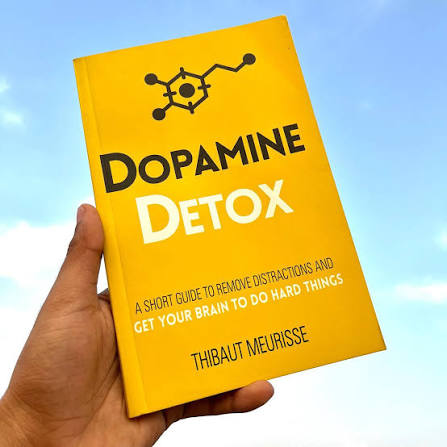
I wasn’t planning to buy another book.
I was just scrolling through Blinkit one evening because, apparently, that’s what I do when I’m bored now. Somewhere between egg and instant noodles, I saw Dopamine Detox by Thibaut Meurisse.
It cost less than what I usually spend on coffee.
Five minutes later, I’d bought it.
It took me another thirty seconds to realize the irony.
I had just bought a book about escaping dopamine….from an app designed to make me keep scrolling and buying things I never planned to buy in the first place.
Fair enough.
The funny thing is, I didn’t buy this book because I wanted to become one of those productivity influencers who wake up at 5 AM, meditate for an hour, journal in cursive, and never touch social media again.
I bought it because I was tired.
Not physically.
Mentally.
For the last few months, almost every evening looked the same.
I’d come back from work, eat dinner, tell myself, “Today I’ll finally solve a couple of LeetCode problems.”
Then I’d unlock my phone.
Instagram.
Reddit.
YouTube.
Sometimes LinkedIn – which somehow manages to make me feel behind in life even though I literally have a job.
I’d open YouTube because I wanted to watch one React tutorial.
Thirty minutes later I’d somehow know why Formula 1 teams change tyres during pit stops.
Still hadn’t written a single line of code.
The worst part?
I didn’t even enjoy it that much.
If you asked me what I watched five minutes after closing YouTube, I honestly couldn’t tell you.
Nothing stayed.
Time just… disappeared.
I wasn’t addicted.
At least I don’t think so.
I could work.
I could function.
I passed college.
Life wasn’t falling apart.
But I definitely wasn’t in control.
And I think there’s a difference.
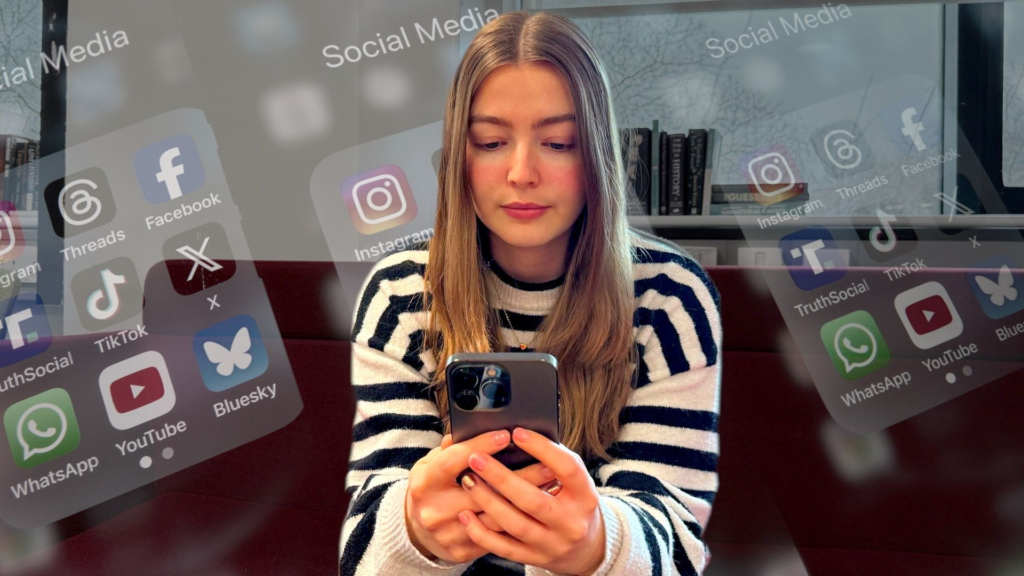
I wasn’t losing motivation. I was losing attention.
I’m someone who genuinely likes building things.
My Notes app is full of app ideas.
Decision Graveyard.
One Second Video Diary.
Failure Database.
Regret Tracker.
Every few weeks I get excited about building something.
The ideas aren’t the problem.
Starting isn’t even the problem.
Sticking with it is.
I’d open VS Code.
Stare at the screen.
Feel like coding was suddenly… boring.
Then I’d convince myself,
“Maybe tomorrow.”
Instead I’d end up watching videos made by people who were actually building things.
Somehow consuming productivity became a substitute for being productive.
I wasn’t looking for more motivation.
I’ve read enough motivational quotes to know they disappear faster than Instagram Stories.
What I wanted back was my attention.
So I started reading the book.
It’s surprisingly short.
No unnecessary fluff.
No 300-page life story before getting to the point.
Just idea after idea.
Some of them I’ve heard before.
But one of them hit differently.
The idea that made me stop blaming myself
The book says something simple.
Dopamine isn’t pleasure.
It’s anticipation.
I had to read that sentence twice.
Because suddenly something I’d experienced hundreds of times made sense.
Think about Instagram.
The exciting part isn’t actually scrolling.
It’s opening the app.
It’s wondering what you’ll see.
Who messaged you.
Which reel you’ll get.
What’s new.
Then you scroll for fifteen minutes.
Close the app.
And somehow feel… nothing.
Not happier.
Not relaxed.
Not fulfilled.
Just emptier.
I started noticing this everywhere.
Opening YouTube felt exciting.
Actually watching random videos?
Not really.
Refreshing Reddit?
Exciting.
Reading the posts?
Forgettable.
Checking LinkedIn?
Stressful before opening.
Still stressful after closing.
Apparently my brain enjoyed chasing the reward far more than receiving it.
Once I noticed that, I couldn’t unsee it.
The internet is really, really good at its job
None of this is an accident.
Instagram isn’t trying to help me leave the app faster.
YouTube isn’t hoping I stop after one video.
Every notification…
Every recommendation…
Every autoplay…
Every infinite scroll…
Someone designed it.
Not because they’re evil.
Because attention is business.
The book talks about something called open systems and closed systems, and honestly, this was probably the most useful idea in the entire book for me.
An open system never ends.
Instagram.
Reddit.
Email.
LinkedIn.
YouTube.
There’s always one more thing.
One more reel.
One more post.
One more notification.
One more video.
One more comment.
There’s no finish line.
Then there are closed systems.
A book chapter.
A LeetCode problem.
A React component.
A bug you’re fixing.
A blog post.
Eventually…
You’re done.
I realized almost every time I got distracted, I had walked into an open system.
I never accidentally spent forty minutes inside VS Code.
But I somehow managed to spend forty minutes on Instagram without remembering a single thing I’d watched.
The moment I got called out
For weeks I kept telling myself something.
“Maybe coding isn’t exciting anymore.”
“Maybe I’ve become lazy.”
“Maybe everyone else has more discipline than me.”
That story felt true.
Until I noticed something.
Whenever I opened Instagram before coding…
Coding suddenly felt impossible.
Not impossible because it was difficult.
Impossible because it felt boring.
And honestly…
How is writing a binary search supposed to compete with an algorithm trained using billions of data points to keep me entertained?
It isn’t.
The problem wasn’t that coding had become boring.
The problem was that my brain had become too stimulated.
That sentence genuinely stayed with me.
It wasn’t a motivation problem.
It wasn’t a discipline problem.
Maybe…
It was an environment problem.
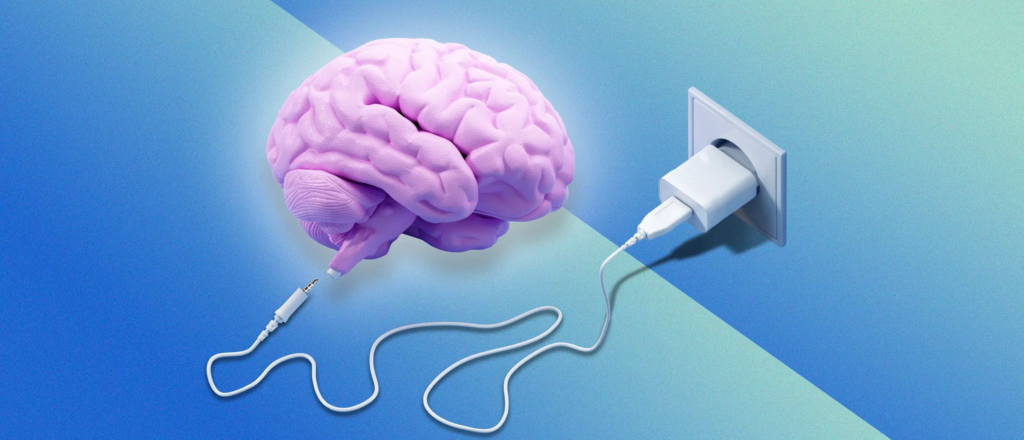
So what actually changed????
Not much.
And I mean that in a good way.
I didn’t delete Instagram.
I didn’t throw my phone away.
I didn’t move to the Himalayas.
I just made a few small changes.
My phone doesn’t stay next to me when I’m working anymore.
It sits across the room.
It sounds stupid.
It works.
Apparently I’m too lazy to walk across the room just to check one notification.
I’ve stopped opening Instagram immediately after waking up.
Not every day.
Some days I still fail.
But most days I don’t.
When I sit down to code, I try to open VS Code before YouTube.
I’d open YouTube because I wanted to learn React.
Thirty minutes later I knew exactly why humans procrastinate according to neuroscience.
I still hadn’t written a single line of code.
Some nights I read before sleeping.
Some nights I scroll anyway.
I’ve stopped pretending those nights don’t exist.
The biggest change, though, is awareness.
I notice it now.
I’ll literally catch myself unlocking my phone and think,
“Wait….why did I even pick this up?”
Half the time I don’t have an answer.
And weirdly…
That’s progress.
I’m still bad at this
I don’t want this to sound like one of those articles where someone says,
“I quit social media for thirty days and my life completely changed.”
That’s not what happened.
I still doomscroll.
Sometimes for an hour.
Sometimes longer.
Some weekends disappear into Instagram.
Some days I still choose YouTube over building.
I still relapse.
A lot.
The difference is…
It happens less.
I finish more LeetCode sessions now.
I’ve started reading again.
I’ve actually been building instead of endlessly planning.
My attention comes back faster after I get distracted.
Earlier one bad scrolling session could ruin my entire evening.
Now it usually takes ten or fifteen minutes before I get back on track.
That’s not a life transformation.
But it is improvement.
And honestly…
I’ll take it.
One thing I appreciated
The title Dopamine Detox is a little misleading.
You’re not literally detoxing dopamine.
The author even points this out in the book, which I appreciated.
Some of the neuroscience is simplified.
Some examples are familiar if you’ve read productivity books before.
But the practical advice stayed with me.
Reduce overstimulation.
Add friction instead of relying on willpower.
Start your day with something finite instead of something infinite.
Don’t expect motivation to magically appear.
Protect your attention before you need it.
Simple ideas.
But surprisingly useful.
One last thought
I used to think I needed more discipline.
Then I thought I needed more motivation.
Now I think I needed something much simpler.
Fewer distractions.
Because it’s hard to build the life you want when every app on your phone is competing to rent your attention for just “five more minutes.”
I’m still figuring this out.
Yesterday I doomscrolled.
I’ll probably do it again tomorrow.
But now, at least, I notice it.
And I think that’s where change actually starts.
Not when you quit.
Not when you become perfectly disciplined.
Just when you notice.
Because once you notice…
You finally get a choice.
Have you ever unlocked your phone for one reason and completely forgotten why you picked it up in the first place?
I’d love to know I’m not the only one.
Signing Off,
Prathibha M
Great content! Keep up the good work!
Thank You